
AI Data for the E-Commerce Industry |Powering Smarter Shopping Experiences
Enhance your online retail store with AI Data for the E-Commerce; use our accurate data labeling and annotation service to develop smart recommendation systems, improve customer personalization, and maximize your online store in the future, where the ecommerce market is expected to reach unprecedented levels.
How Does AI Data Transform Modern E-Commerce?
The E-Commerce industry has been transformed by AI to help online retailers understand and serve their customers with intelligent and data-driven insights. Since AI implementation in ecommerce is disrupting the retail sector, this change will help e-commerce sites to provide customers with personalized shopping experiences, predict customer behaviour, and automate important business processes in a way that has never been seen before. The advantages of AI information to E-commerce companies are far-reaching, covering all areas of operation, including inventory and customer interactions.
With the current continued growth of the global AI-enabled ecommerce market and according to AI in ecommerce statistics, the ecommerce market is projected to reach USD 26.79 billion between 2024 and 2029 with a growth rate of 34.7 percent CAGR. We experience integration throughout the customer journey (visual search) to voice-activated shopping. AI adoption in ecommerce is used to gain competitive advantage by companies, and AI customer insights are becoming increasingly comfortable among ecommerce brands. Artificial intelligence technology turns out to increase customer satisfaction and conversion rates in the digital human empathy with AI efficiency and AI hybrid market.
Nonetheless, training data to produce these advanced ability of AI systems has to be of high quality to work efficiently. The key to a successful implementation of AI data annotation for e-commerce products lies in well-annotated datasets that should be used to train models. Annotation Box offers tailored AI data annotation services which e-commerce companies should create in order to establish trustworthy AI applications. Our highly accurate AI data annotation for e-commerce and extensive data preparation will drive your technology in retail with full accuracy and AI efficiency.
What Are Examples of AI Data for the E-Commerce Industry?
The importance of AI data annotation in e-commerce is hard to overestimate in the context of providing smooth buying experiences. The application of AI across E-commerce needs numerous AI functionalities in various business processes. To understand how AI is transforming machine learning datasets e-commerce in real life to bring more revenue and customer interactions, let us consider the following examples:

AI-powered Product Recommendation Data
Browsing history, purchase patterns, and customer preferences are analyzed with machine learning algorithms to make relevant product recommendations. AI-based product recommendation information assists these smart systems in processing vast volumes of data points to comprehend individual shopping behaviour. Additionally, the e-commerce customer data analytics enhances cross-selling and upselling opportunities to a greater extent. This is the Future of E-commerce Annotation.

Visual Search & Image Recognition
The AI search will allow customers to post photos to discover similar products right away in your catalog. The computer vision technology of artificial intelligence recognises colours, patterns, and product features. This removes the frustration of searching and shortens the way to buy. The visual search provided by AI can maximize the discovery rates, as the shopper can discover what exactly he or she wants.

Dynamic Pricing Optimization
Successful AI implementation keeps the prices constantly going up and down depending on the demand, competition, and inventory. The analysis of real-time market trends would be used to ensure that the best pricing is used to maximize profit. These systems are effective in balancing between revenue targets and perceptions of customer value. Smart pricing automation adjusts faster to market variations than manual adjustments.

Chatbots & Virtual Shopping Assistants
Customer service is being transformed by conversational AI agents in e-commerce. The latest AI chatbots, which are an application of AI natural language processing, provide 24-hour customer support in real-time. These virtual AI assistant devices are efficient in responding to product queries, order tracking, and returns. With AI personalization, the automated support cuts operational expenses, and the response time increases dramatically.

Fraud Detection & Security
The artificial intelligence systems use transaction history to determine suspicious crimes before they can be harmful. Machine learning models will identify irregularities that can signify possible fraud or account takeovers. These security solutions ensure that merchants and customers do not suffer losses. Fraud prevention is automated and ensures trust and reduces the number of manual security reviews; AI assists organizations in guarding their revenues.

Inventory Management & Demand Forecasting
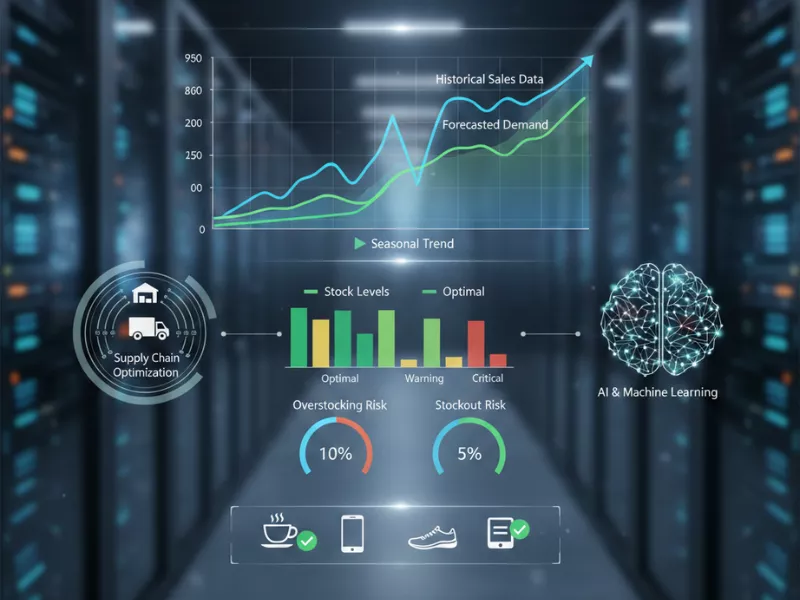
Predictive analytics optimize inventory depending on the seasonality and sales trend. AI helps to avoid overstocking and even stockouts because it predicts the demand well. These knowledge bases optimize operations in supply chain and minimize warehousing expenditure. The intelligent inventory system makes sure that favorite products are on stock when the customers desire them. Machine learning and AI collaborate to enhance the accuracy.
Why Choose Annotation Box for E Commerce AI Data Training?

95% Accurate Annotations
We maintain a strict standard of 95% accuracy for all e-commerce AI training datasets to ensure reliable platform performance. Potential clients are encouraged to request a free sample to verify our precision before completing their final project payment.

Cost-Effective Solutions
We offer premium annotation services at highly competitive and affordable prices. Request a free quote today to receive a customized budget that aligns perfectly with your specific e-commerce AI project requirements and business objectives.

Global 24/7 Support
Our dedicated support team is available around the clock to process your orders and resolve technical inquiries at any time. We are here to provide constant assistance, helping you build the next generation of accurate AI for platforms.

Expert Project Managers
Each client is assigned a dedicated project manager who manages the whole data flow process up to the end. Such managers will be your source of updates on your progress and offer instant clarification on any complicated requirements.

Customized Services
Online retail developers can share their unique requirements to receive specialized, tailor-made solutions from our team. We work closely with e-commerce businesses to ensure our labels and attributes match the specifications of their product catalogs and customer segments.

Guaranteed Timely Delivery
We value effective turnarounds that will enable your annotated data to be received according to the agreed time and without compromising on quality. Our operations will ensure that your AI development cycle does not slip behind schedule.

Robust Data Security
We are fully GDPR compliant, and thus our facility is the best to offer protection and privacy to your sensitive customer information. We also make use of encrypted transfers to ensure that your proprietary e-commerce data is safe.

Versatile Data Support
We provide one-stop support for various e-commerce data formats, such as product images, customer comments. You require assistance with categorizing products or sentiment analysis. We are there to offer expert annotation to all types of data.
How Can AI Data Impact Your E-Commerce Business?
Let’s explore the benefits of AI for Ecommerce businesses and their transformative impact:

Enhanced Personalization
Adopting AI in ecommerce is transforming systems that use customer information to generate personal shopping experiences for every visitor. With AI personalization engines, the relevant products will be shown automatically. These experiences boost the engagement and minimise the bounce rate of the pages. Personalization by AI increases rates of conversion compared to generic presentation. The e-commerce industry has seen the AI revolutionize the interaction between businesses and customers. It is also possible that generative AI tools are used to produce custom content based on individual preferences.

Improved Customer Insights
Deep learning analytics show a customer behavioral pattern and purchase decisions that are not visible. AI-based business intelligence enables retailers to get more insights into the demographics of their audience. Such understandings are used in marketing, and product assortment is made more effective. Evidence-based knowledge removes speculation with practical intelligence. It is also possible to use AI to improve predictive insights into future trends. The various AI use cases related to customer analytics are churn prediction, lifetime value calculation, and segment identification.

Automated Product Categorization
Through e-commerce product categorization services, AI and machine learning automatically organize vast product catalogs into logical hierarchies. Implementing AI automation will save an endless hours of manual data entry. Proper classification enhances the search possibility and allows customers to locate goods more quickly. Coherent product arrangement improves the shopping experience greatly. The AI application makes the work of catalog management more efficient, and the possibility of AI to work with large volumes of data has reshaped the ways e-commerce brands go about their inventories.

Content Moderation Excellence
With content moderation for e-commerce platforms, AI automatically filters unacceptable user-generated information, such as reviews and photos. Such systems safeguard the reputation of the brands by upholding the quality standards in each touchpoint. Automated moderation is scalable (as compared to customers). Their use of AI in operations also allows balancing the human feeling and AI efficiency to ensure the integrity of their platforms. Content moderation using AI tools empowers the business to expand the capacity of its AI operations without a corresponding rise in cost.

Optimized Search Functionality
Natural language processing is used to understand the customer search queries in order to provide the correct information all the time. Integrating AI knows synonyms, misspellings, and context to enhance the success rate of the search. Improved search will minimize frustration and ensure your buyer is kept busy on your platform. Smart AI search engines are designed to study the user interaction and thus become better over time. AI can help to provide people with an improved search experience and speed up product search.

Supply Chain Efficiency
Predictive models are also used to optimize the logistics, the way it forecasts the time when a product will be received and also find the possible bottlenecks. AI-powered supply chain management minimizes shipping expenses and also enhances delivery precision. These systems synchronize several variables to deliver products to customers. Smart logistics generates competitive advantages by providing better fulfillment capabilities. AI adoption throughout the supply chain enhances AI effectiveness. It has become a necessity that modern retailers leverage AI capabilities to enhance the working processes.
How to Avail Our E-Commerce AI Data Training & Annotation Services?
1. Consultation and Requirement Gathering
Following the initial discussion of your project needs, we implement a strategic planning phase to align our workflows with your specific goals:
➤ We collaborate with clients to identify e-commerce advanced AI objectives, such as product recommendation systems, visual search capabilities, automated categorization, and customer sentiment analysis.
➤ Our team defines customized annotation protocols for e-commerce datasets, covering product images, customer reviews, transaction data, and behavioral tracking information.
2. Preparing Sample Data
We develop a preliminary dataset based on the established protocols and submit it for your technical evaluation and approval:
➤ We share the pilot annotated data with e-commerce developers and data scientists to ensure the labels meet the precision required for production applications
➤ Our workflow combines advanced AI technologies, labeling tools, with human-in-the-loop verification to ensure every product attribute, sentiment tag, or category is identified with absolute accuracy.
3. Approval, Payment, and Final Project
Upon approval of the sample data, we transition to full-scale production, assigning your project to our specialized team of e-commerce data annotators:
➤ Our expert annotators begin the high-volume processing phase, applying precise attributes to thousands of product images, reviews, or transaction records according to your specific business criteria.
➤ We perform multi-tiered quality assessment, including a final administrative review, to guarantee that the Data labeling services e-commerce AI adheres to industry standards and your guidelines.
4. Model Training and Deployment
In the final stage, we prepare and deliver the refined training data to empower your machine learning models and ensure successful platform deployment.
➤ We support the training of your AI models, helping them interpret complex variables such as customer preferences, seasonal trends, and product relationships.
How We Helped E-Commerce Companies: Success Stories

Ensuring Consumer Safety with Advanced Content Moderation in E-Commerce Marketplaces
…
ShopWorld had issues with the filtering of fake products, deceptive and false reviews as well as improper images. The growth could not be manually moderated.
“The smart content moderation system of AnnotationBox has changed everything to us. It has not only helped improve the trust of the users but also considerably decreased malicious listing on our platform.”
– Priya Mehta, Chief Compliance Officer, ShopWorld
Read the full case study
Know more

Enhancing Child Safety Online with Advanced Content Moderation
…
KidSafe Entertainment was faced by poor content control that subjected the children to unethical content such as cyberbullying and foul language. Paper review was time consuming and parents concerns escalated.
“Collaborating with AnnotationBox has been a revolution to KidSafe Entertainment. Their new AI based filters and expert moderation has made our platform much safer and enjoyable to use.”
– Linda Clarke, CEO, KidSafe Entertainment
Read the full case study
Know more
Frequently Asked Questions
What are the AI data that e-commerce businesses operate with?
There are various types of AI in the ecommerce market, such as customer behavioral data such as browsing history and purchase pattern, transactional data such as order history and cart abandonment rates, demographic data, product data, inventory levels, and non-business data such as market trends and seasonality.
What is the effect of AI on e-commerce personalization?
AI is driving control over your business, then personalization of e-commerce becomes more advanced in the sense that current customer data is analyzed by machine learning algorithms to provide tailored product suggestions, dynamic content, and future suggestions based on previous interactions, preferences, and behaviors, and the power of AI can also lead to increased engagement and conversion rates.
What is the relevance of implementing AI in e-commerce data insights?
Companies use AI in their operations to manage e-commerce data insights to gain relevance, as AI can optimize vast amounts of data, such as predictive analytics and machine learning, which validate the presence of hidden patterns, predictive trends, optimal pricing, and inventory management, and use AI to drive decision-making based on data that can increase customer retention and business expansion.
How much do your data annotation services for retail cost?
We charge based on your specific project requirements. The cost also depends on annotation complexity, data volume, and project deadlines. However, the hourly data annotation charges are around $5-$7.
How long does the e-commerce annotation process take?
The annotation process completely depends on your requirements. After assessing your project, we provide a realistic timeline to ensure timely delivery.
How quickly can you scale up an urgent retail and e-commerce project?
Our workforce can help you meet the urgent deadline. Our solutions ensure fast delivery without compromising quality.