
AI in Agriculture | Transforming the Sustainable Future of Farming
Increase productivity in the agricultural sector by integrating AI; train your AI models with our data labeling and annotation services to enhance crop cycles for a stable global food supply.
How Does AI in Agriculture Revolutionize Precision Farming?
AI In Agriculture is currently revolutionizing farming through smarter, data-driven decisions. This shift drives precision agriculture, where farmers can now monitor crop health and soil conditions in real time. The use of advanced AI solutions in modern agriculture ensures the optimum usage of water and fertilizer for sustainable farming practices.
As the AI in agriculture market continues to expand, we see the integration of AI across various stages, from automated seeding to robotic harvesting. Consequently, efficiency increases and global food production becomes much more sustainable.
However, building these robust AI and machine learning systems requires high-quality training data to function correctly. AnnotationBox provides specialized AI data annotation services to help you develop reliable ag-tech tools. Trust our precise image tagging and data preparation to power your farming technology with total accuracy.
What Are Examples of AI Technologies Used in Farming?
The role of AI in organic farming can not be underestimated when it comes to smart management. Let’s explore the real-world examples of applications of AI in agriculture industry that show how these tools increase output and efficiency:
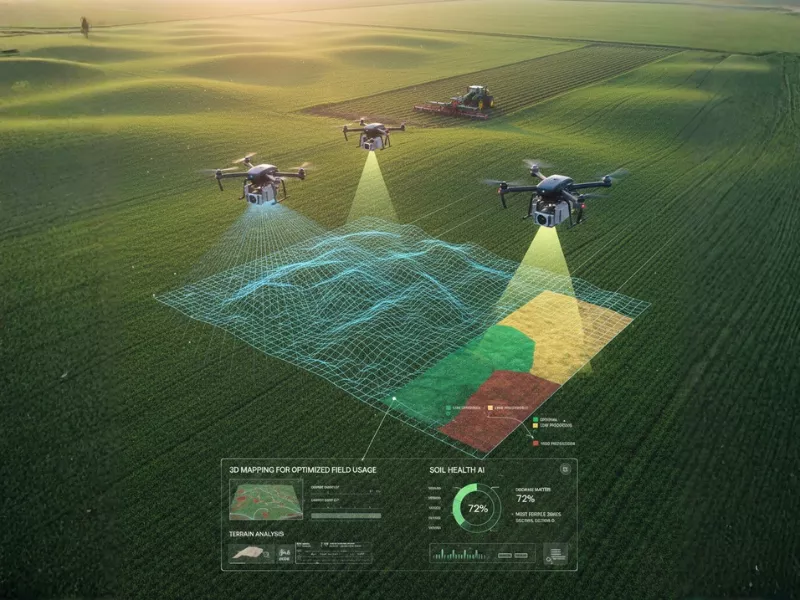
3D Mapping to Optimize Field Usage
Drones scan the agricultural landscape to generate detailed 3D maps of existing terrain. These maps reflect current field conditions like elevation and slope. Furthermore, AI for soil health monitoring evaluates soil conditions for better planting. This mapping guides ideal density and identifies the most fertile land zones quite clearly.

Crop Diseases & Health Monitoring
Advanced Agricultural computer vision is vital for crop health monitoring to detect plant stress early. AI for disease prediction in crops prevents massive crop damage by catching infections quickly. This system tracks crop performance and adjusts crop rotation plans. This helps ensure high crop yield and quality for the global food market.

Detect Weeds & Unwanted Plants
With the use of Use of drones with AI in agriculture, precise imaging helps growers track crop growth patterns effectively across open fields. High-resolution AI can analyze leaf shapes to accurately distinguish weeds from crops without any manual labor. These smart sensors ensure only invasive plants receive treatment to save vital costs. This automated detection lowers the crop wastage.

Fructify Level Detection
Farmers leverage optical sensors to assess fruit maturity before any harvesting begins. Data-driven AI plays a crucial role in predicting the best window for picking produce. By using smart farming AI technologies, growers verify color to ensure consistent produce quality for customers and consumers everywhere.

Automation of Farming Systems with Robots
New Automation in agriculture with AI tools solves labor shortages by handling tough, repetitive tasks. Smart robots manage precise irrigation and picking cycles to help farmers save water. This tech secures our food system and enhances productivity. Such innovation reduces human error for much more reliable seasonal harvests.
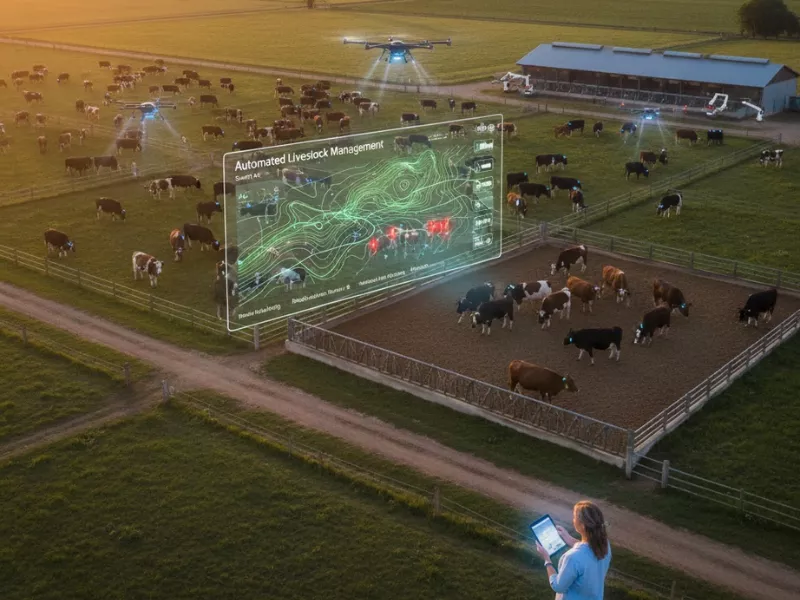
Automate Livestock Management
Smart AI tools monitor livestock movement to identify illness or behavioral changes in real time. Sensors track individual eating habits to ensure every animal receives proper nutrition. Automated tracking reduces manual effort and improves herd health. These systems alert farmers immediately when animals require medical attention or any specialized care.
Why Choose AnnotationBox for Data Training for Agricultural AI Adoption?

95% Accurate Annotations
We maintain a strict standard of 95% accuracy for all agricultural AI training datasets to ensure reliable field performance. Potential clients are encouraged to request a free sample to verify our precision before completing their final project payment.

Cost-Effective Solutions
We offer premium agricultural AI annotation services at highly competitive and affordable price points. Request a free quote today to receive a customized budget that aligns perfectly with your specific AgTech project requirements and developmental goals.

Global 24/7 Support
Our dedicated support team is available around the clock to process your orders and resolve technical inquiries at any time. We are here to provide constant assistance, helping you build the next generation of accurate and reliable AI for agriculture.

Expert Project Managers
Every client is paired with a specialized project manager who oversees the entire data workflow from start to finish. These managers serve as your primary point of contact for regular progress updates and provide immediate clarification on any complex doubts.

Customized AgTech Services
Agricultural AI developers can share their unique requirements to receive specialized, tailor-made solutions from our team. We work closely with researchers to ensure our labels and attributes match the exact environmental variables of their specific farming models.

Guaranteed Timely Delivery
We prioritize efficient turnarounds to ensure that your annotated data is delivered within the agreed timeframe without sacrificing quality. Our streamlined processes guarantee that your AI development schedule remains on track for successful and timely field deployment.

Robust Data Security
Our facility is fully GDPR compliant, ensuring the highest level of protection and privacy for your sensitive information assets. We utilize encrypted transfers and strict internal protocols to keep your proprietary agricultural research secure and confidential throughout the process.

Versatile Data Support
We offer all-around support for diverse agricultural data formats, including imagery, video, text, and sensor logs. Whether you need help with LiDAR topographic maps or multispectral drone data, we are equipped to provide expert annotation for every data type.
How AI Can Impact Agriculture?
Let’s see how is AI used in agriculture and its impact:
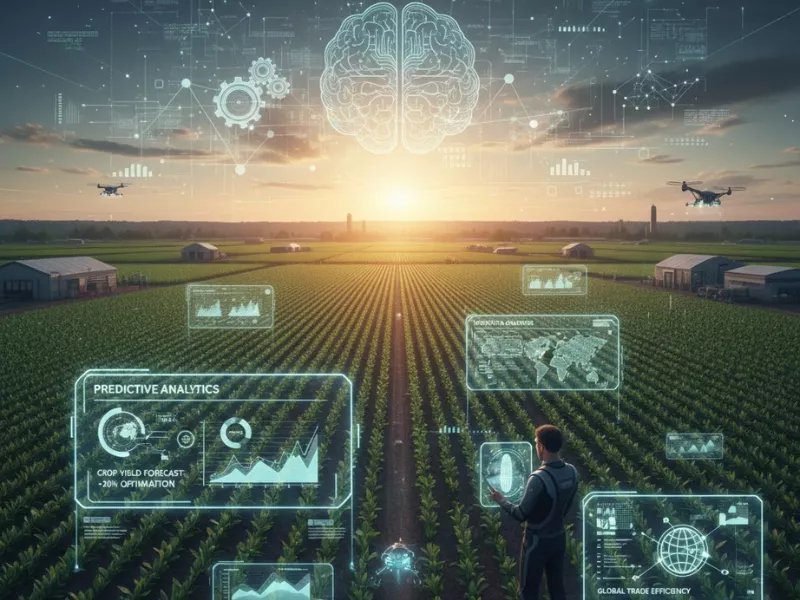
Predictive Analytics
High-level AI-driven systems leverage historical patterns to predict crop yields accurately. These AI applications in precision agriculture help modern farms secure their future revenue with an advanced prediction model. Such insight optimizes seasonal supply chains while enhancing global trade efficiency every day now.

Decision Support
Digital dashboards provide real-time data to empower modern growers. Using Smart farming technologies using AI, farm managers make informed decisions based on live health trends rather than simple intuition. These tools streamline workflows while reducing the risks of manual human errors across large global estates.

Prescriptive Agriculture
Advanced algorithms determine the best course of action for every specific field zone. By adjusting agricultural practices, farmers optimize total output quality. Smart prescriptions turn raw observations into high-value actions to ensure very reliable harvest results today.

Optimizing Resource Usage
High-efficiency AI systems minimize chemical and water waste across all fields. Through deep learning, technology identifies exact input needs for every unique hectare. Consequently, overhead costs drop while the environmental impact improves across modern global zones now.
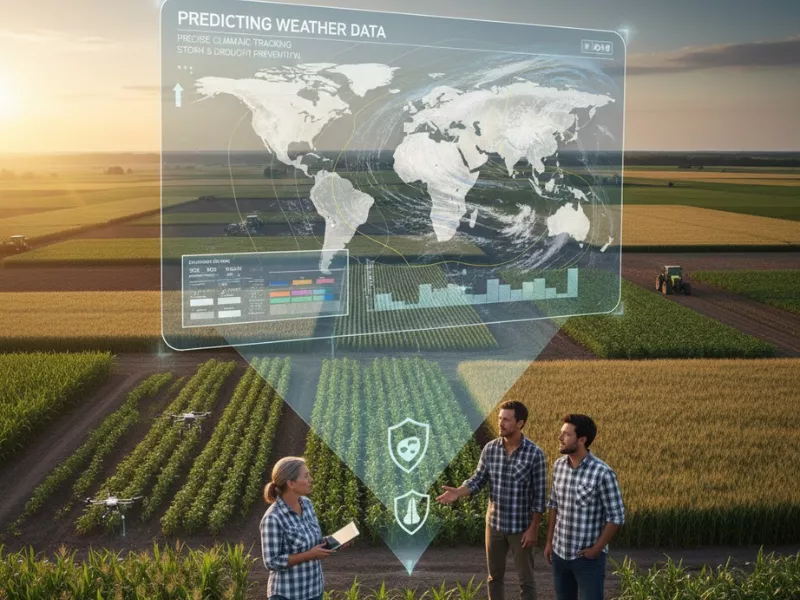
Predicting Weather Data
Integrating satellite imagery allows for precise and localized climatic tracking. Farmers adjust their crop management plans based on atmospheric forecasts. Transitioning to this model prevents storm damage and drought stress across all the critical growth phases now today.

Regenerative Agriculture
With the help of Data analytics in agriculture with AI, farmers get guidance for soil restoration through precision carbon planting. By promoting sustainable agriculture and sustainable farming, technology keeps land fertile. These methods preserve our delicate ecosystem for several future farming generations to explore here now.
How to Avail Our Agricultural AI Data Training & Annotation Services?
1. Consultation and Requirement Gathering
Following the initial discussion of your project needs, we implement a strategic planning phase to align our workflows with your specific goals:
➤ We collaborate with clients to identify AgTech AI objectives, such as automated pest detection, crop health analysis, yield forecasting, and livestock behavior monitoring.
➤ Our team defines customized annotation protocols for agricultural datasets, covering multispectral drone imagery, satellite data, LiDAR for topography, and soil sensor logs.
2. Preparing Sample Data
We develop a preliminary dataset based on the established protocols and submit it for your technical evaluation and approval:
➤ We share the pilot annotated data with AgTech startups and agricultural researchers to ensure the labels meet the rigorous precision required for field applications.
➤ Our workflow combines advanced AI-assisted labeling tools with human-in-the-loop verification to ensure every plant, weed, or animal is identified with absolute accuracy.
3. Approval, Payment, and Final Project
Upon approval of the sample data, we transition to full-scale production, assigning your project to our specialized team of agricultural data annotators:
➤ Our expert annotators begin the high-volume processing phase, applying precise attributes to thousands of frames or data points according to your specific farm criteria.
➤ We perform multi-tiered quality assessments, including a final administrative review, to guarantee the annotated data adheres to global agricultural standards and your guidelines.
4. Model Training and Deployment
In the final stage, we prepare and deliver the refined training data to power your machine learning models and ensure successful field deployment:
➤ We support the training of your AI models, helping them interpret complex variables such as growth stages, soil moisture levels, and varying environmental conditions.
➤ Our team facilitates a continuous feedback loop, refining data quality and updating labels based on model performance to achieve peak accuracy in real-world farming environments.
Frequently Asked Questions
Can AI increase farm productivity?
Yes, AI can help by optimizing Variable Rate Technology (VRT) to apply exact nutrient volumes across different soil zones. By calculating precise fertilizer requirements per square meter, growers reduce input waste by up to 30%. This data-driven strategy maximizes harvest potential from underperforming field areas.
How is Drone Imagery Used in Agriculture Annotation?
Annotators tag multispectral imagery to create Normalized Difference Vegetation Index (NDVI) maps. Processing these labels alongside crop physiology models allows drones to detect invisible plant stress like nitrogen deficiencies. These annotated pixels act as the primary guide for autonomous aircraft to target specific rows without spraying the entire field.
What is the Future of AI in Agriculture?
The agriculture market is projected to evolve into “Digital Twin” ecosystems where virtual farm simulations predict crop responses for the next decade. Future systems will focus on Molecular Farming, utilizing AI to engineer crops that produce vaccine proteins. This shift will transform farms from food centers into high-tech pharmaceutical manufacturing hubs.
Why is Annotation Important for AI in Agriculture?
A harvesting robot that uses AI requires edge-case labeling to navigate outdoor unpredictability like lens flare or mud-splattered sensors. High-quality annotation provides depth perception training for robotic arms. This ensures the machines can grasp fragile produce with enough force to pick it, but without causing any skin bruising or structural damage.
How Can AI be Used in Agriculture?
Beyond the field, the agricultural industry uses AI to monitor pollinator health, such as honeybee movement patterns, to ensure proper flower fertilization. It is also applied to cold-chain logistics, where sensors calculate the precise expiration of produce during transit. This real-time visibility significantly minimizes food spoilage at retail points and processing centers.
What are the Challenges of AI in Agriculture?
Training robust learning algorithms is difficult because biological phenotypes vary drastically based on localized microclimates. Collecting data from traditional farming can help resolve these issues by diversifying training datasets for rare plant varieties. However, electronic sensor drift caused by high humidity and fertilizer exposure remains a persistent technical challenge in most tropical environments.
What is the ROI of using AI in farming?
Implementing AI typically yields a direct ROI through a 15-25% reduction in pesticide and fertilizer overheads. Additionally, ai can help farms reach a faster break-even point by minimizing crop waste and maximizing per-hectare yields through precise, early-stage intervention that protects market-ready produce quality.
Can AI systems in agriculture be customized for my specific crops and local climate?
Yes. Advanced learning algorithms utilize “Transfer Learning” to calibrate general botanical data for niche plant varieties and localized soil pH levels. This tailoring happens alongside crop physiology tracking to ensure that automated alerts are specifically tuned to your farm’s distinct topographical and environmental characteristics.
What regulations or compliance requirements apply to AI in farming and agtech data?
Compliance focuses on GDPR for privacy and ISO standards for machine-to-machine safety protocols. Within the agricultural industry, platforms must also adhere to AgData Transparent (ADT) certifications to manage farmer data ownership. Any system that uses ai for chemical distribution must strictly follow regional EPA or pesticide governance mandates.