
Image Annotation for Healthcare
Adhering to healthcare best practices and using expert tools and techniques, we help you achieve AI Accuracy while training machine learning models by delivering high-precision medical data labeling services.
What is Image Annotation in Healthcare?
Image Annotation for Healthcare is the process of adding metadata to medical scans to make them machine-readable. Technicians enrich this data using techniques such as bounding boxes, labels, or segmentation masks. Consequently, this information trains machine learning models to accurately analyze and identify medical conditions. Labels range from simple categories, like defining a scan as “abnormal,” to complex datasets, for example, indicating a tumor’s exact size and location.
Labeled medical data typically serves two primary functions:
- Medical Research: Researchers utilize large datasets to test and refine models for developing new diagnostic tools and AI-driven treatments.
- Clinical applications: Radiologists deploy machine learning models to assist with diagnostics, anomaly detection, and patient risk assessment.
Ultimately, precise labeling is critical for advancing AI in both research and practical care. To facilitate this, AnnotationBox employs expert professionals specialized in creating high-quality, verified annotated data for medical imaging. To avail our data labeling services, contact us now!
What are the Different Types of Image Annotation for Healthcare?
Comprehensive healthcare AI development relies on expert Image annotation services. At AnnotationBox, we work on six primary annotation types to structure clinical data for machine learning training.

Bounding Box
This type draws rectangular regions around objects of interest within images. As the simplest technique, it is ideal for object detection tasks. Experts often use it to label images, such as identifying simple fractures or foreign bodies in a standard X-ray or digital imaging files.

Polygon
Polygons utilize closed figures made of multiple line segments to map irregular shapes. This technique of Image Annotation for Disease Detection provides higher precision than boxes. Annotators trace precise contours to determine the specific location and size of complex organs or asymmetrical tumors found in diagnostic scans.

Keypoints
Keypoints represent specific feature locations or skeletal joints. This granular approach supports AI medical image annotation for radiology. It proves particularly effective for pinpointing small structural details or anatomical measurements in low-contrast visual data, such as ultrasound images.
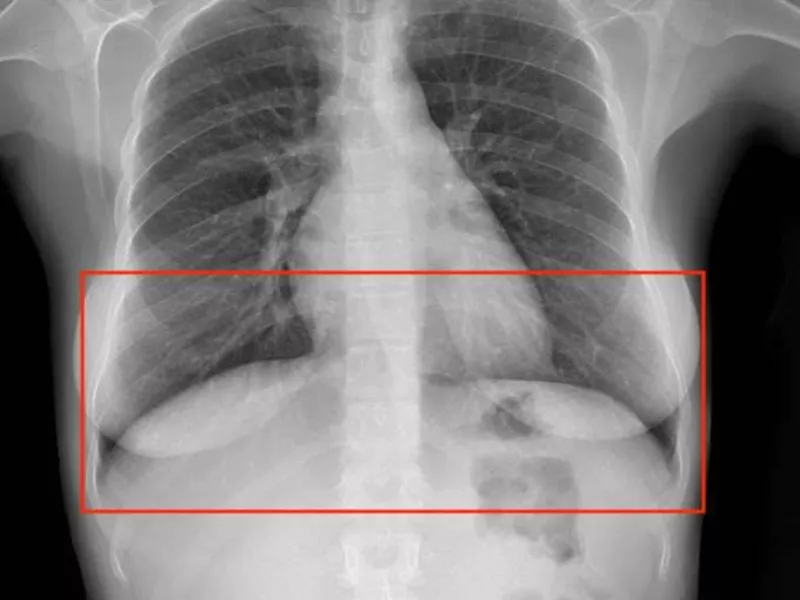
Landmark
Landmarks denote specific points of interest, like a nose tip or lesion center. This method primarily aids registration tasks to align different scans. Consequently, it is vital for accurate AI-based CT scan image annotation for diagnosis, ensuring anatomical consistency across different views.

Point Cloud
A point cloud is a collection of dots representing specific 3D coordinates. This data is essential for registration and volumetric segmentation. By mapping depth and volume, this technique effectively models complex structures found in 3d images generated by advanced scanners.
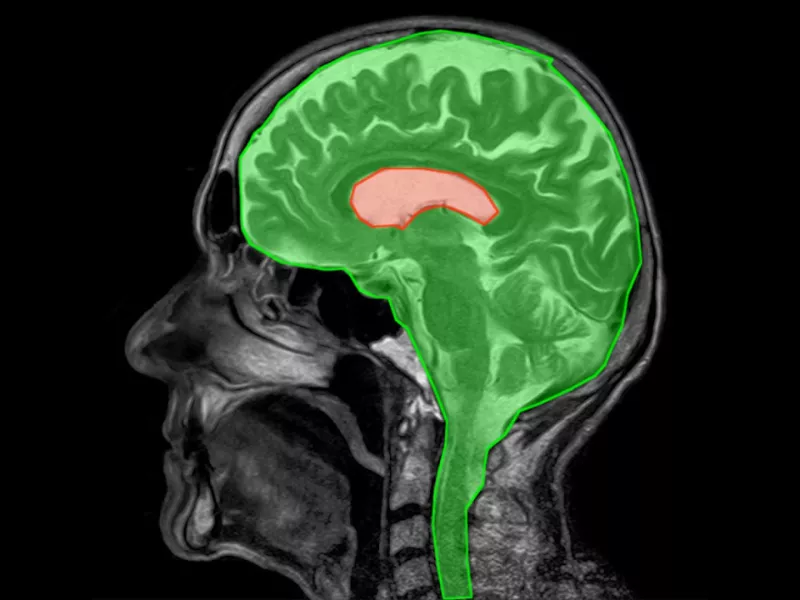
Semantic Segmentation
This technique classifies every pixel in a file for rigorous medical image analysis. By distinguishing between tissue types, it facilitates precise image classification. Additionally, it helps separate clinical data from patient identifiers, supporting the crucial anonymization of sensitive records.
Why Choose Us for Medical Image Data Annotation Services?

95% Accurate Annotations
We deliver high-precision results powered by our expert medical annotation services. You can request a pilot run to test our quality and receive a free sample dataset before committing to final payments.

Reasonable Prices
Our pricing model is transparent and competitive. We ensure you receive high-quality annotated datasets at reasonable rates, with zero hidden charges or unexpected fees.

24/7 Support
We operate around the clock to provide technical assistance and answer your queries. Reach out to us at any time for immediate discussions or status updates on your project.

Dedicated Project Managers
You never have to wait long for a response. We assign dedicated project managers to coordinate with experienced medical annotators, ensuring you receive real-time updates throughout the workflow.

Tailored Solutions
We understand the complex needs of the healthcare industry. We provide Medical image annotation services for healthcare AI that are fully customized to your diagnostic goals, ensuring the right solutions for your specific models.

Timely Delivery
We respect clinical timelines. By combining advanced proprietary tools with rigorous human review, we ensure that verified, high-quality data is delivered to you strictly on schedule.

HIPAA & GDPR Compliant
We implement robust security measures to protect patient privacy and comply with global standards like HIPAA and GDPR. Through strict data processing agreements, we ensure the absolute safety and privacy of the patient.
All Types Covered
Our capabilities span the entire medical domain. From basic 2D X-rays to complex volumetric segmentation, get in touch with us to discuss your specific imaging project today.
Why is Medical Image Annotation Important for Healthcare AI?
The quality of AI-driven diagnostics depends heavily on data precision, underscoring the critical Importance of Medical Annotation. Here are six reasons why rigorous labeling is vital for innovation.

Foundational Model Training
To accurately develop a neural network, systems require massive datasets with clear ground truth. An annotation converts raw visual data into structured learning material, which is indispensable to train a machine learning model. Without this labeled foundation, AI simply cannot interpret complex biological variances.
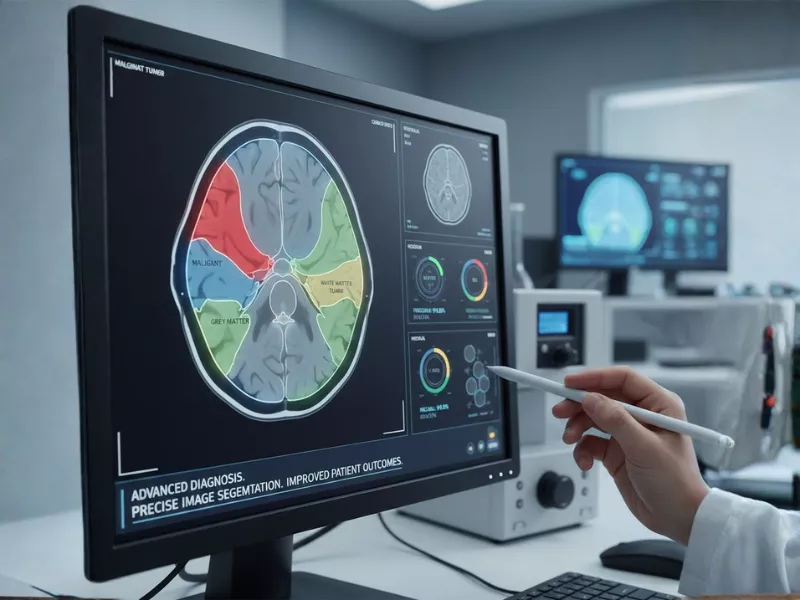
Precision in Diagnostics
Advanced diagnosis requires our precise image segmentation annotation service to isolate specific tissues or lesions. High-quality inputs improve the performance of machine learning algorithms in medical imaging, directly influencing positive patient outcomes through earlier detection and personalized treatment planning.

Benchmarking and Verification
Labeled data acts as the absolute benchmark for the validation of AI tools before commercial deployment. Healthcare institutions rely on these reference images used during testing phases to verify reliability, ensuring algorithms are robust enough to trust with live clinical decisions.

Reducing Practitioner Burnout
By automating routine analysis, AI tools support busy medical professionals in identifying pathologies faster. This technical synergy reduces administrative strain on healthcare professionals, ensuring that human expertise is focused on complex diagnostics rather than initial screening or repetitive manual measurements.

Improving Data Usability
Medical images often include noise that confuses algorithms. Annotators refine this raw Digital Imaging and Communications data, ensuring AI overlays function correctly within standard Picture Archiving and Communication workflows. Consequently, healthcare providers gain reliable, actionable insights without disrupting their established clinical routines.

Enabling Collaborative Innovation
Annotated data empowers healthcare organizations to safely pool resources for large-scale studies. By rigorously adhering to Health Insurance Portability and Accountability privacy standards during the labeling process, institutions can share anonymized insights. This collaboration fosters faster, more robust AI development across the industry.
Our Process: From Consultation, Order to Delivery
Machine learning models automate tasks and improve diagnostic accuracy in healthcare. However, reliable results depend on training models with high-quality, verified data. Our systematic process ensures your data is primed for success.
1. Annotating Sample Data
We start by annotating a few sample images following your initial guidelines. This process highlights potential issues early and allows us to provide an accurate price quotation.
➤ Understand Shortfalls: Identify and resolve instruction ambiguities or data gaps immediately.
➤ Feedback Integration: Refine annotation rules based on real-time analysis of the sample output.
➤ Client Approval: Secure your confirmation on the sample quality before finalizing the scope.
2. Medical Data Preparation: Data Ingestion and Vetting
Before production begins, we rigorously prepare your raw data to address medical format complexities.
➤ Dataset Vetting: Scan for inconsistencies and assist in splitting data into training, validation, and testing sets.
➤ Format Support: Handle industry standards like DICOM and TIFF, preserving slices and metadata.
➤ Pilot Launch: Annotate a small calibration batch to demonstrate quality standards.
3. Execution and Quality Assurance
Upon pilot approval, our team begins full-scale annotation using specialized labeling services.
➤ Expert Annotation: Apply precise labels, bounding boxes, or segmentation masks.
➤ Peer Review: Conduct multiple rounds of checks to ensure anatomical accuracy.
➤ Standard Validation: Perform consensus checks to enforce strict healthcare standards.
4. Secure Delivery and Feedback Integration
We ensure that the final training datasets are secure, verified, and delivered on schedule.
➤ Secure Transfer: Deliver data via encrypted channels to fully protect patient privacy.
➤ Flexible Output: Provide files in your preferred format (JSON, XML, masks) ready for training.
➤ Feedback Loop: Incorporate your input into future batches for continuous improvement.
Our Success Stories and Use Cases

How AnnotationBox’s High-Quality Data Collection Fueled a 30% Improvement in Diagnostic AI Accuracy
“AnnotationBox’s expert medical data annotation and quality focus enabled MedTech Innovations to launch their AI platform faster and more accurately, significantly contributing to their product’s success.”
Read the full case study

How Medical Annotation Works In Enhancing Machine Learning Accuracy?
Data annotation is an effective process to label, tag, transcribe, and show the desired outcomes predicted by a machine learning model. Medical Annotation significantly improves the efficiency of X-rays, CT scans, MRI scans, and other tests with utmost accuracy.
Read the full case study

How Medical Annotation Improved Efficiency Of X-Rays, CT Scans, and MRI Scans
“We have done the first phase of review of “AnnotationBox,” to analyze the quality of the instrument annotation project, and we are delighted with the perfect accuracy level.”
Read the full case study
Frequently Asked Questions
How is Medical Image Annotation Used in AI?
Medical image annotation is used in AI to label clinically relevant features, such as tumors or fractures, on imaging data, including X-rays, MRIs, and CT scans. These labeled datasets train models to recognize medical patterns accurately. In addition, annotated images enable AI to assist across specialties such as radiology, pathology, neurology, and surgery. This support improves early disease detection, reduces diagnostic errors, and enhances clinical decision-making, ultimately improving patient outcomes.
What is the role of Image Annotation in Disease Diagnosis?
Image annotation transforms visual medical data into quantitative diagnostic evidence. Precisely defining anomaly boundaries, it enables AI models to perform volumetric analysis and measure growth rates that clinicians may not easily detect. In addition, detailed classification labels allow algorithms to distinguish subtle pathology stages, such as differentiating benign from malignant tissue. As a result, annotation establishes a standardized, data-driven diagnostic baseline. This reduces subjective interpretation and supports accurate disease staging and clinical decision-making.
What is the Difference Between Medical Image Annotation and Labeling?
In medical imaging, labeling assigns a general category, such as tumor or normal, to an image. In contrast, annotation adds detailed, structured information. It includes pixel-level segmentation, bounding boxes, and key points that precisely localize abnormalities. As a result, annotation provides spatial and clinical context that labeling alone cannot. Labeling offers a high-level tag, while annotation delivers the precision AI models need to learn what to detect and where to focus.
What Makes Medical Data Image Annotation Different from General Data Annotation?
Medical image annotation differs from general annotation because it requires clinical expertise and strict regulatory compliance, such as HIPAA. It involves complex 2D, 3D, and 4D imaging formats and focuses on detecting subtle anomalies across multiple views. In addition, accuracy carries a high clinical risk. As a result, medical image annotation is more specialized, highly regulated, and technically demanding than annotating everyday images.
How to Choose the Right Medical Data Image Annotation Tool?
To choose the right medical image annotation tool, avoid relying on standard DICOM viewers. While tools like 3D Slicer support basic annotation, they are not optimized for ML training. Their outputs often lack instance IDs and structured, ML-ready exports.
Instead, select a purpose-built medical annotation platform that offers:
- Support for medical formats such as DICOM and TIFF
- Advanced labeling tools (e.g., segmentation, bounding boxes)
- A clinician-friendly, efficient user interface
- Structured export formats compatible with ML pipelines
- Optional medical data labeling services to scale annotation efforts
These capabilities ensure annotations are usable for training and deploying AI models.
How is Medical Image Annotation Used in Radiology?
In radiology, annotation trains AI to automate triage and measurements from imaging data. For example:
- Bounding boxes flag urgent findings such as pneumothorax and intracranial hemorrhage for case prioritization
- Semantic segmentation separates bone from soft tissue to detect subtle fractures
- Longitudinal annotations enable automated lung nodule growth tracking
As a result, AI reduces manual measurements and accelerates radiologist workflows.
What are Real-world Examples of Medical Image Annotation in Oncology?
In oncology, annotation enables precision treatment planning and response assessment. For example:
- Tumor volumetric segmentation supports radiation therapy planning by targeting tumors while sparing Organs at Risk (OARs)
- RECIST automation measures lesion size changes across scans to assess chemotherapy response or resistance
These applications directly support personalized cancer care.
Medical Image Annotation Applications in Cardiology?
Cardiology annotation quantifies cardiac function and vascular health. For example:
- Left ventricle and myocardium segmentation enables automated Ejection Fraction (EF) calculation
- Coronary angiography labeling identifies stenotic lesions and estimates blood flow restriction (FFR) non-invasively
- 3D cardiac model generation supports surgical planning for congenital heart defects
Together, these annotations improve diagnosis, risk assessment, and treatment planning.
Can medical image annotation be customized for specific diseases?
Yes! At AnnotationBox, we can offer custom medical image annotation for specific diseases.
Can you work on Both Proprietory and Third-party Image Annotation Tools?
Yes! At AnnotationBox, we can work on both proprietary and third-party image annotation tools.
What is the ROI of Medical Image Annotation Services?
Outsourcing medical annotation delivers high ROI by significantly reducing the operational cost of utilizing high-value internal resources. For example, with specialist radiologists costing significantly more (often $100-$200/hour) than professional annotators, delegating pixel-wise labeling can reduce data preparation costs by approximately 40% to 60%.
It accelerates the time-to-market for diagnostic AI tools by enabling rapid scalability of training data, which speeds up regulatory validation (FDA/CE) cycles.
Furthermore, high-precision external validation minimizes the need for costly model retraining caused by poor ground truth data, ensuring development efficiency.
Our Latest Blogs
Stay ahead with expert insights and industry knowledge.

Importance of Medical Annotation In Enhancing Healthcare Data Management
Healthcare professionals are encouraging the use of artificial intelligence, AI in medical...

Exploring the Impact of AI in Radiology
AI is revolutionizing radiology . It has diverse applications, including medical imaging analysis...

Polycystic Ovary Syndrome Detection For Machine Learning Experts
According to a study, artificial intelligence (AI) and machine learning (ML) can detect and...